
News
Nigerian Prof. Oghenetega Ighedo, Makes History as First Black Woman to Earn a PhD in Pure Mathematics at UNISA in 148 Years
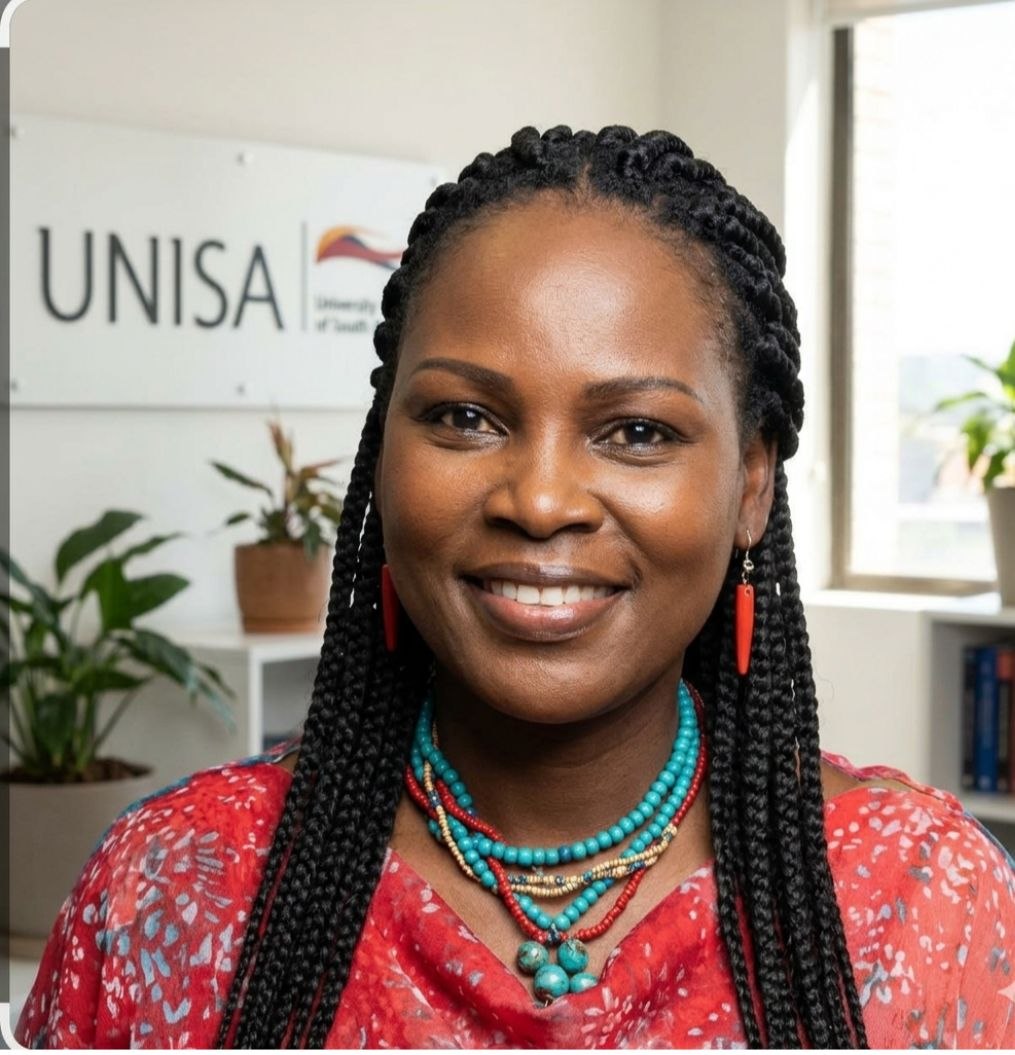
In a remarkable achievement that is inspiring women and Africans around the world, Nigerian-born Professor Oghenetega Ighedo has become the first Black woman to earn a PhD in Pure Mathematics from the University of South Africa in the institution’s 148-year history.
Her journey is a powerful reminder that determination, hard work, and resilience can break barriers that once seemed impossible.
Professor Ighedo began her academic journey at Delta State University, where she earned a Bachelor’s degree in Industrial Mathematics. She later obtained a Master’s degree in Pure Mathematics from the University of Ibadan before pursuing her doctorate at UNISA.
What makes her story even more inspiring is that she completed her PhD in just three years while serving as an Associate Professor, raising two children, and expecting a third. She proved that motherhood and academic excellence can go hand in hand.
Speaking about her inspiration, Professor Ighedo revealed that her love for mathematics came from her mother, a retired mathematics teacher, whose passion for teaching sparked her own interest in the subject. She also said she was driven by the desire to increase the representation of Black women in Pure Mathematics, a field where they remain significantly underrepresented.
Her achievement is not just a personal victory, it is a victory for Nigeria, Africa, women in STEM, and every young girl who dreams of pursuing a career in science and mathematics.
To every student reading this: your background does not define your future. With dedication, perseverance, and belief in yourself, you can achieve extraordinary things.
Congratulations, Professor Oghenetega Ighedo, on this historic milestone! May your success continue to inspire generations of young Africans to dream bigger, work harder, and never give up.
What message does Professor Ighedo’s achievement send to young African girls who dream of careers in science, technology, engineering, and mathematics (STEM)? Share your thoughts in the comments!