News
Bank of Canada: Lower Immigration and an Aging Population Are Reshaping Canada’s Economy
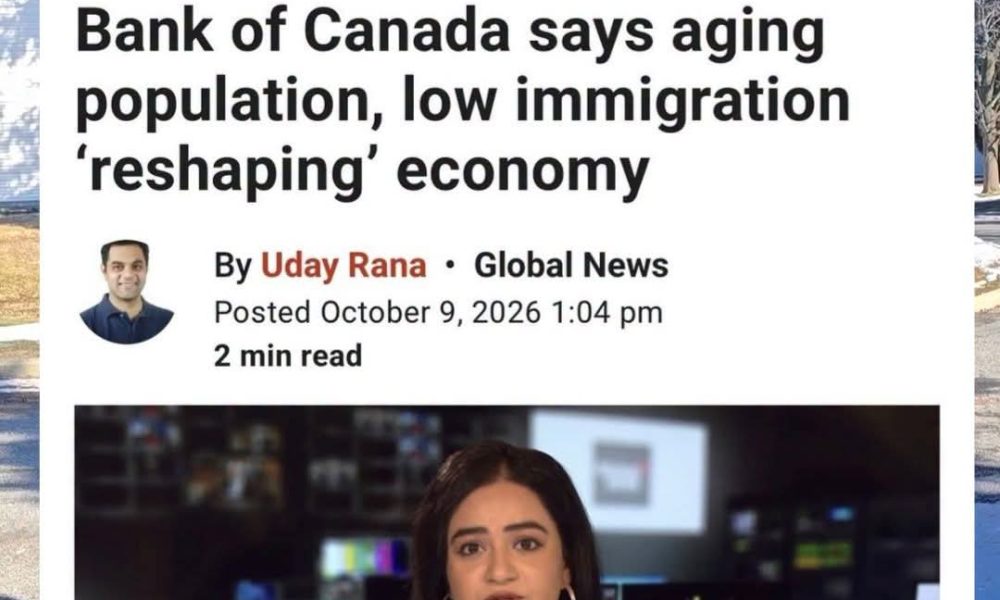
A new analysis from the Bank of Canada highlights how Canada’s aging population and declining immigration levels are changing the country’s economy.
According to the report, Canada’s population grew by around 3% annually in the early 2020s, compared with an average of about 1.2% over much of the previous 50 years. However, population growth slowed to just 0.5% in 2025, following changes to federal immigration policies.
The report explains that rapid population growth brought more workers into the economy and helped ease labour shortages, but it also increased pressure on housing and social services.
With fewer immigrants expected to arrive and more Canadians reaching retirement age, the Bank of Canada highlights several potential changes:
• Housing: Lower immigration could reduce demand for housing and ease some pressure on housing costs.
• Jobs and the workforce: Fewer newcomers and more retirements could mean fewer available workers, potentially worsening labour shortages in some sectors.
• Economic growth: Fewer workers and lower consumer demand could slow the pace of economic growth.
• Healthcare and services: An aging population could increase demand for medications, home care, hospitals and long-term care.
• Wages and inflation: Labour shortages could push wages higher in some sectors, potentially contributing to higher prices.
The key message is that Canada is entering a period of demographic change, and these shifts will affect how the economy produces, consumes and grows.
What do you think? Will lower immigration and an aging population make it easier for Canada to address housing affordability, or could the resulting workforce shortages and slower economic growth create new challenges?
Let’s discuss respectfully in the comments.
#Canada #CanadianEconomy #Immigration #LifeInCanada #Fejisworld